Table of contents
Paris sells itself on the Eiffel Tower, the Louvre and glossy cabarets, yet some of its most revealing stories sit in the city’s relationship with gambling, a thread that runs from aristocratic salons to today’s regulated online market. France’s casino rules are famously strict, and the capital itself has long lived with a peculiar paradox: plenty of appetite for games of chance, but limited room for traditional casinos inside the city limits. The result is a map of discreet venues, forgotten addresses and legal workarounds that shaped how Parisians played, and where.
Paris’s casino paradox, written into law
A city of risk takers, without casinos in the centre: that contradiction is not an accident of geography, it is the product of regulation. In France, casinos are tightly controlled and typically authorised in seaside resorts, thermal towns and designated tourist areas, a framework rooted in public order concerns and reinforced over time by the Interior Ministry’s oversight. Paris, despite its population and tourist density, has historically sat outside the classic “casino town” categories, and that constraint pushed gambling into other formats: private clubs, peripheral venues and, more recently, digital platforms.
The data underlines how central the casino economy is to the French leisure landscape, even if Paris does not host the archetypal Riviera-style halls. According to sector figures compiled by the national casino trade body (Casinos de France), the country counts roughly 200 land-based casinos and they collectively generate gaming revenue in the billions of euros each year, with slot machines providing the majority share in most establishments. The French state, meanwhile, captures significant fiscal returns through taxes and social contributions, and local municipalities benefit from levies and tourism spillovers. That mix of public money, policing and local development explains why the state guards casino authorisations so carefully, and why Paris has tended to channel play into alternatives rather than letting full-scale casinos proliferate in its dense centre.
Those alternatives are not just footnotes, they are chapters of Parisian social history. For decades, gaming in and around the capital leaned on member-based circles, where the boundary between entertainment, networking and vice could blur, and on suburban casinos that served as pressure valves for demand. Even today, many visitors arrive expecting a Monte Carlo fantasy and instead discover something more French: a system where poker clubs and regulated games coexist with restrictions on traditional casino floors, and where enforcement has periodically rewritten the map, closing some doors while opening others. That push-and-pull is precisely what makes Paris’s lesser-known gambling heritage worth tracking, because it tells you as much about governance and class as it does about roulette.
The private gaming clubs that shaped nightlife
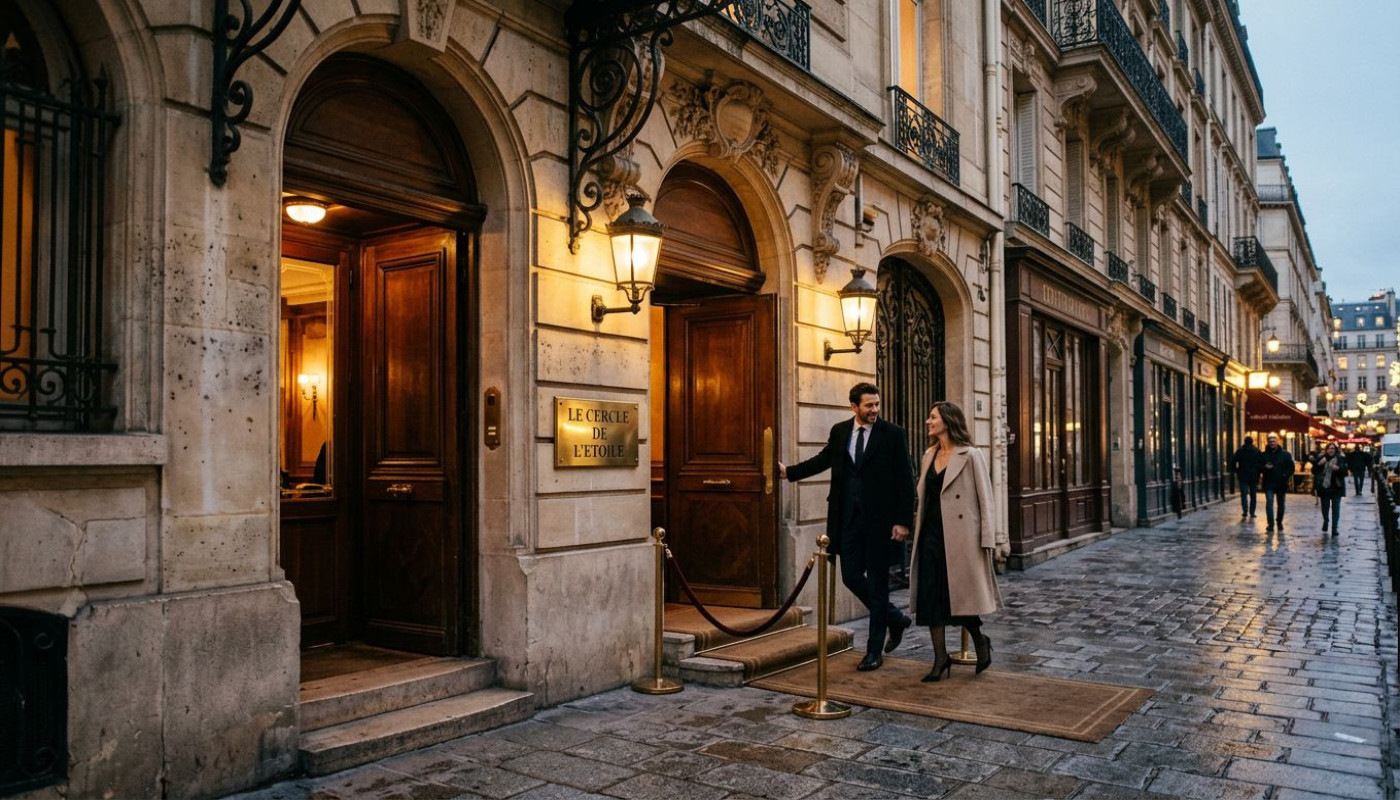
Behind velvet curtains, Paris played anyway. For much of the 20th century, and well into the 21st, the city’s gambling scene leaned on private gaming circles rather than classic casinos, a distinctly Parisian compromise that satisfied demand while keeping the most visible casino infrastructure at arm’s length. These clubs, often located in central neighbourhoods, became part of the nightlife ecosystem, attracting poker players, tourists, business figures and sometimes, inevitably, the attention of police and regulators.
The modern era of Paris gaming clubs is also a story of crackdowns and rebirths. In 2017, authorities ordered the closure of several well-known gaming circles, citing concerns that ranged from administrative irregularities to the risk of criminal infiltration, and the shutdown abruptly ended a long-running model. The move was not symbolic; it was a decisive enforcement action that temporarily emptied parts of the city’s legal gambling offer. Then came a new framework: “clubs de jeux” were authorised on an experimental basis, allowing certain games under strict conditions, and giving Paris a regulated, supervised alternative to the old circles. That experiment has been extended more than once, precisely because it is politically and economically delicate: it aims to keep gambling visible and taxable, while limiting the risks that historically clustered around private venues.
If you are hunting “hidden gems” in the historical sense, this is where you look, not for a single surviving address that can be romanticised, but for the pattern of how venues moved, rebranded and adapted to policy. The gems are the stories: a doorbell-only entrance, a membership culture, the way poker tables became social theatres, and the way the state repeatedly insisted on traceability, identity checks and surveillance. In other words, Paris’s gambling heritage is less about one famous casino hall and more about an urban form of play that kept changing shape to stay legal, or at least to stay in the grey zone between tolerance and prohibition.
For visitors today, the key insight is practical as well as historical: the “casino experience” in Paris may look like a controlled club environment rather than a sprawling resort floor, and it may require planning, identification and an understanding of what is and is not on offer. That is part of the city’s character, and it also explains why some players, especially travellers used to broader casino menus, end up looking beyond French borders for different regulations and game selections, including options presented by a non UK casino guide when they want a clearer view of jurisdictions and licensing models. Paris’s clubs show how regulation shapes nightlife, but they also highlight why the online era has made geography feel less decisive than it once was.
On the edge of town, the casinos took root
Follow the demand, and you end up outside Paris. Because the city centre has not traditionally hosted classic casinos, the surrounding regions have long played an outsized role, offering the full casino package within reach of Parisians who were willing to travel a little. This “edge-of-town” pattern is not unique to France, but in the Paris basin it became particularly visible, turning certain nearby destinations into weekend or evening magnets for gaming, dining and shows.
Historically, the logic was straightforward: where authorisations existed, investment followed, and where tourists already flowed, casino operators could justify substantial venues. In the wider Île-de-France region and beyond, casinos tapped into transport links, commuter populations and a steady stream of visitors who wanted more than a card room. These venues typically combined slot machines, table games and entertainment, and they benefited from the French model in which casinos are deeply enmeshed with local economic policy. Municipalities have often seen casinos as anchors that support jobs, hospitality and tax receipts, while the state has seen them as activities that must be monitored, licensed and taxed.
The numbers explain why the model persists. Across France, casinos collectively employ tens of thousands of people directly and indirectly, and they sit in a broader gambling market where the state-owned operator (FDJ, now La Française des Jeux) and the PMU horse-betting network also occupy major positions. France’s gambling participation is substantial, and the state’s fiscal interest is not marginal; it is structural. That means the perimeter venues near Paris are not merely entertainment options, they are nodes in a regulated economy that the government can measure, tax and supervise more easily than informal play.
For the curious traveller, the “hidden gem” angle is often less about secrecy and more about surprise: real casino floors exist close to Paris, but many first-time visitors never hear about them because the city’s branding overwhelms its periphery. A short train ride can shift you from museum queues to flashing slot banks, and the contrast is revealing, because it shows how Paris exports certain leisure activities to its edges while concentrating other forms of spectacle in the centre. It is also a reminder that the Paris gambling story is geographically fragmented by design, and the fragmentation itself is a historical artefact.
From salons to smartphones, the rules keep moving
Gambling in Paris has always followed the law’s footsteps, and the law has never stopped walking. The most dramatic shift of the past two decades is the rise of regulated online gambling, which redrew the map far more radically than any new venue could. In 2010, France opened parts of its online market to competition under the supervision of the national regulator, a turning point that allowed licensed operators to offer online poker and sports betting, while keeping online casino games such as slots outside the legal offer. That single policy choice still shapes what French players can and cannot do domestically, and it is one reason the vocabulary around licensing, offshore sites and player protection has become mainstream.
The regulator, now the Autorité nationale des jeux (ANJ), publishes regular data on market performance, including handle and gross gaming revenue across segments, and the trend line has been clear: online betting has grown, boosted by major sporting events and aggressive advertising cycles, while retail networks still dominate in certain products. The French state has tried to balance liberalisation with harm reduction, tightening rules on promotion, reinforcing self-exclusion tools and insisting on identity verification. In parallel, enforcement against unlicensed operators has remained a priority, with blacklists, payment-blocking measures and legal actions designed to steer players toward regulated options.
This is where Paris’s “hidden historical gems” become less about addresses and more about continuity. The same tension that once drove gambling into clubs and outskirts now plays out on screens: demand meets restriction, and consumers navigate a landscape shaped by what the law permits. For some, that means staying within the French regulated perimeter; for others, especially those seeking online casino-style games that are not licensed domestically, it means researching international jurisdictions carefully, comparing consumer protections, dispute mechanisms and licensing credibility. The history matters because it teaches a simple lesson: in France, gambling is never just entertainment, it is a regulated social contract, and the rules are part of the experience.
What to do if you want to play
Paris rewards planning, and gambling is no exception. If you want a legal in-person experience, check the current status of authorised gaming clubs, bring valid identification and expect rules on entry and conduct; for a fuller casino offering, budget time and transport for venues outside the city centre, and set a spending limit before you sit down. For online play, use regulated platforms where possible, and if you look abroad, compare licensing and player protections, because “cheaper” can become expensive fast.
On the same subject